Heads up: EverydayChecked is reader-supported. If you buy through links on this page, we may earn a small commission, at no extra cost to you. It never changes our verdict.
The problem
Why a camera and a long hike don't get along
A camera around your neck is fine for an afternoon at the park. Take it up a trail for a few hours and the math changes fast. The strap that came in the box digs into the back of your neck, the body swings into your chest on every climb, and a heavier lens turns a pleasant walk into a slow grind on your shoulders.
I shoot a Canon R7 with a Tamron 18-400mm zoom. It’s not a huge rig, but not a featherweight either. On a standard neck strap, the whole weight lands on one narrow band across the back of my neck. By the time I’d reached anything worth photographing, I was already sore and not in the mood to linger over a shot.
The fix isn’t a lighter camera. It’s carrying it somewhere other than your neck.
The one I use
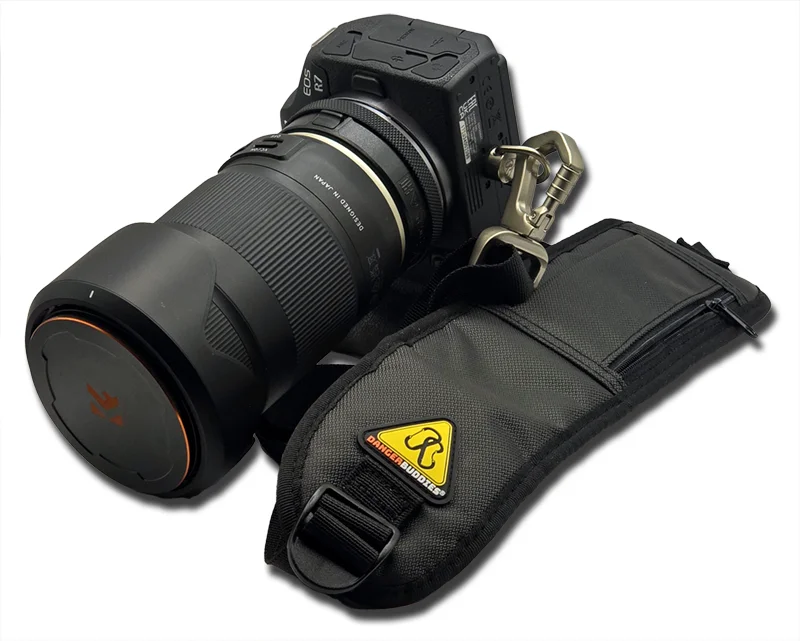
Danger Buddies S-Curve Rapid Access Cross-Body Camera Sling Strap
- Cross-body sling
- Stainless + zinc hardware
- 100% nylon
- Card/battery pocket
- S-curve pad sits on the shoulder, not the neck
- Locking carabiner keeps the camera attached
- Slides up the strap for quick shooting
- Zippered pocket for cards and spare battery
We may earn a commission, at no extra cost to you.
The shape
What the S-curve actually does
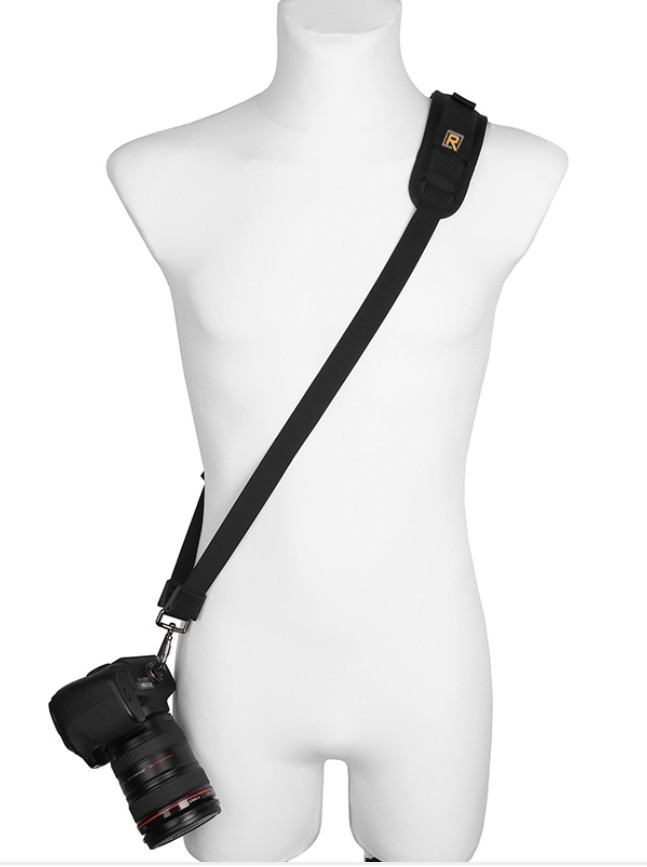
The whole idea of a sling strap is to move the load off your neck and across your torso. The Danger Buddies strap goes one step further with a contoured pad (the “S-curve”) that follows the line of your shoulder instead of sitting flat against it.
In practice, that means the weight settles onto the meaty part of your shoulder and spreads out, rather than biting into one spot. The camera hangs at your hip, lens-down, and rides close to your body so it isn’t swinging around on the descent. When you want it, you slide it up the strap to your eye in one motion, take the shot, and let it drop back to your side.
It’s a simple bit of ergonomics, and it’s the difference between dreading the weight and forgetting it’s there.
On the trail
How it carries when you're actually moving
The first thing I noticed was the silence: no more constant little tugs at the back of my neck. With the camera down at my hip, it stayed out of the way on scrambles and didn’t clatter into me on rocky steps. I could keep both hands free for balance and still have the R7 ready in a second when something caught my eye.
The pad does a genuine job of spreading the weight. A full afternoon out and my shoulders weren’t complaining the way they used to. And because the camera sits low and close, it never felt like a liability on uneven ground.
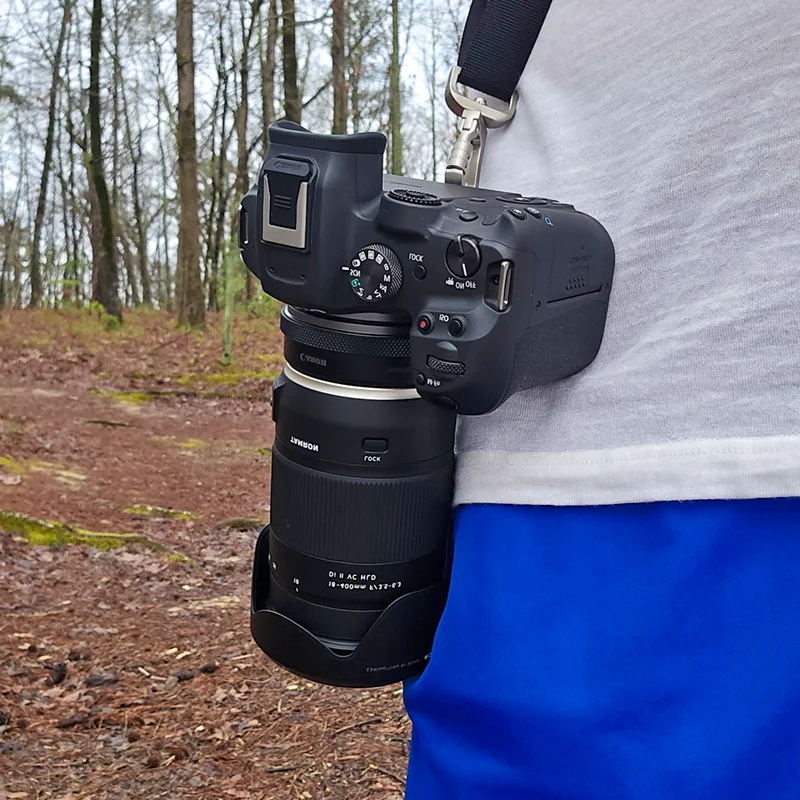
For the first time, I stopped noticing my camera’s weight and started noticing the view.
One honest caveat: a sling is a single point of contact, so on really rough terrain I still keep a light hand on the body when I’m moving fast. That’s good practice with any strap, but worth saying out loud.
Peace of mind
The hardware is the part you don't want to skimp on
A camera strap is only as trustworthy as its weakest connector, and this is where a lot of cheap straps fall apart, sometimes literally. The Danger Buddies uses stainless steel and solid zinc hardware with a 100% nylon webbing, and you can feel the difference the moment you clip it on. It’s not the thin stamped metal you get on bargain straps.
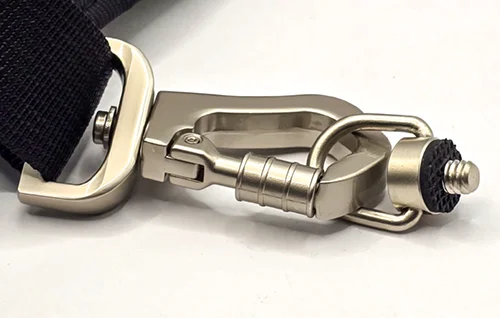
The connection point is a locking carabiner: it clips to your camera’s tripod mount, then a collar threads down to lock the gate shut. Once it’s locked, the camera isn’t coming off until you decide it should: no accidental pops on a bump, no slow loosening over the day.
Side by side
A standard neck strap vs. the Danger Buddies sling
A standard neck strap
- All the weight on the back of your neck
- Camera swings into your chest on climbs
- Thin, flimsy connecting hardware
- Slow to raise and frame a shot
The Danger Buddies sling
- Weight spread across the shoulder
- Camera rides low and close at the hip
- Locking carabiner and stainless hardware
- Slides up to your eye in one motion
The details
The small touches that add up
Beyond the core comfort-and-security story, a few extras earn their keep on a long day out:
- A zippered pocket: built into the pad is a small zip pocket, just right for a spare memory card, an extra battery, or a lens cloth. It’s enough to leave the day bag behind on short loops.
- Adjustable length: you can dial in how high or low the camera rides, which also sets how quickly it comes up to your eye.
- Color options: it comes in a few colors if you’d rather not run all-black.
- Built for weather: the nylon webbing and metal hardware shrug off the kind of damp, dust, and knocks that outdoor shooting throws at them.
Keeping it in shape is easy. Spot-clean spills with a damp cloth and mild soap and let it air dry. If it gets badly soiled, take off the metal hardware and hand wash the webbing in cool water, with no machine washing or drying. An occasional wipe of the hardware with a dry cloth keeps it looking sharp.
The verdict
So, is the Danger Buddies strap worth it?
If your camera never leaves a table or a tripod, you don’t need this. But if you actually walk with your gear (trails, travel, long days on your feet) the strap is one of the cheapest upgrades that changes how much you enjoy the whole thing.
The Danger Buddies S-Curve nails the three things that matter: it’s comfortable enough to forget, secure enough to trust, and quick enough that you don’t miss the shot. After a full season with my R7, it’s stayed clipped on, and I haven’t gone looking for a replacement. That’s about the highest praise I give a piece of gear.
Questions
FAQ: hiking camera straps
My camera feels heavy on my neck and shoulders. Will this help? Yes, that’s the whole point. A cross-body sling like the S-Curve moves the load off your neck and spreads it across your shoulder, so you can shoot for hours without the usual ache.
I’m worried about dropping my camera outdoors. Is it secure? The locking carabiner is the key feature here. It clips to your tripod mount and then locks shut, so the camera stays attached even when you’re scrambling over uneven ground.
My current strap is always tangling or getting in the way. Is this better? A sling sits close to your body and moves with you, so it tangles far less than a strap that hangs off your neck. The camera rides at your hip and stays accessible without flopping around.
Will it survive rough outdoor conditions? It’s built for it. The 100% nylon webbing paired with stainless steel and zinc hardware handles damp, dust, and knocks without degrading.
Does it work with both mirrorless and DSLR cameras? Yes. It connects at the standard tripod mount, so it works with a light mirrorless body or a heavier DSLR with a big lens. Mine carries a Canon R7 with a Tamron 18-400mm just fine.
Is there any downside? It’s a single point of contact, like any sling. On genuinely rough terrain it’s smart to keep a light hand on the camera when you’re moving quickly. That’s sensible practice with any strap, not a flaw in this one.